
Tower defense, built from real circuits.
Glitches, surges and worms crawl down the copper toward your CPU. You stop them with resistors, capacitors, diodes, transistors and inductors, and each one works the way the real part does. Any two of them make a circuit.
Coming to Android first, then iPhone and iPad. Free with ads, or $1.99 once to turn them off. Plays offline. No account.
Five parts. Each one does what the real one does.
If you know what a part does in a circuit, you already know what it does here. If you don't, you will after one wave.

Resistor
In the game
Slows enemies and burns them.
On a real board
A resistor limits how much current gets through, and the energy it holds back turns into heat.

Capacitor
In the game
Charges up, then blasts everything nearby.
On a real board
A capacitor stores charge between two metal plates and can let it all go at once. A camera flash works that way.
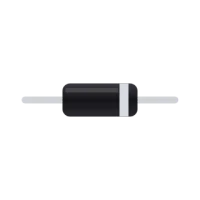
Diode
In the game
Shoves enemies back down the path.
On a real board
A diode lets current through in one direction and blocks it coming back.
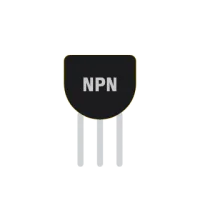
Transistor
In the game
Powers up the parts next to it.
On a real board
A transistor lets a small signal control a much bigger one. Billions of them are the switches inside a computer chip.
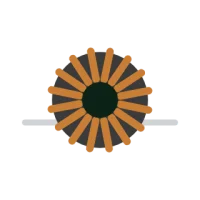
Inductor
In the game
Drags fast enemies way down. Slow ones barely notice.
On a real board
An inductor is a coil of wire, and it fights any change in current. The faster the change, the harder it pushes back.
Put any two together and you get a circuit.
Drop a Capacitor on a Resistor and it becomes an RC Timer: a slow charge, then a huge blast that sets things on fire. On a real board, the resistor sets how fast the capacitor fills. Five parts make ten circuits.

Slow charge, huge blast that sets things on fire.
RC Timer
Resistor + Capacitor
Slow charge, huge blast that sets things on fire.
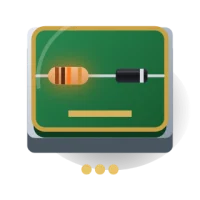
LED
Resistor + Diode
Lights enemies up so everything hits them harder.
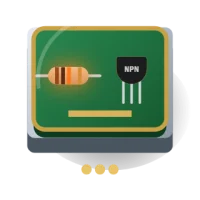
Amplifier
Resistor + Transistor
Big boost to its neighbors, or one heavy shot.
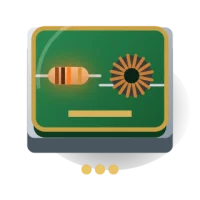
Low-pass Filter
Resistor + Inductor
Slows everything and shreds small fast stuff.

Rectifier
Capacitor + Diode
Steady beam that cuts right through Ripple shields.
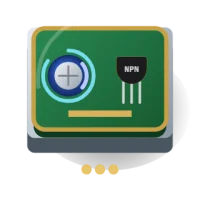
Flash
Capacitor + Transistor
Charges up, then stuns everything in range.

LC Tuner
Capacitor + Inductor
Locks onto whatever enemy there is most of.
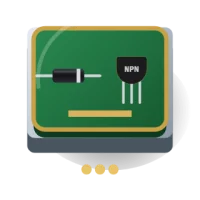
Logic Gate
Diode + Transistor
Quick shots that hop between targets.
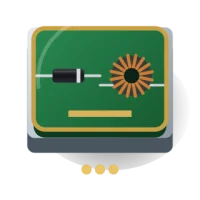
Snubber
Diode + Inductor
Hits fast things hardest. Great against Surges.
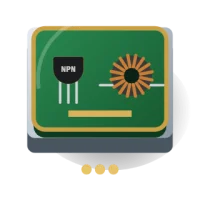
Boost Converter
Transistor + Inductor
A beam that gets stronger the longer it holds on.
Nothing is wasted. Anything goes with anything, and adding more to a tower only makes it stronger.
How it plays
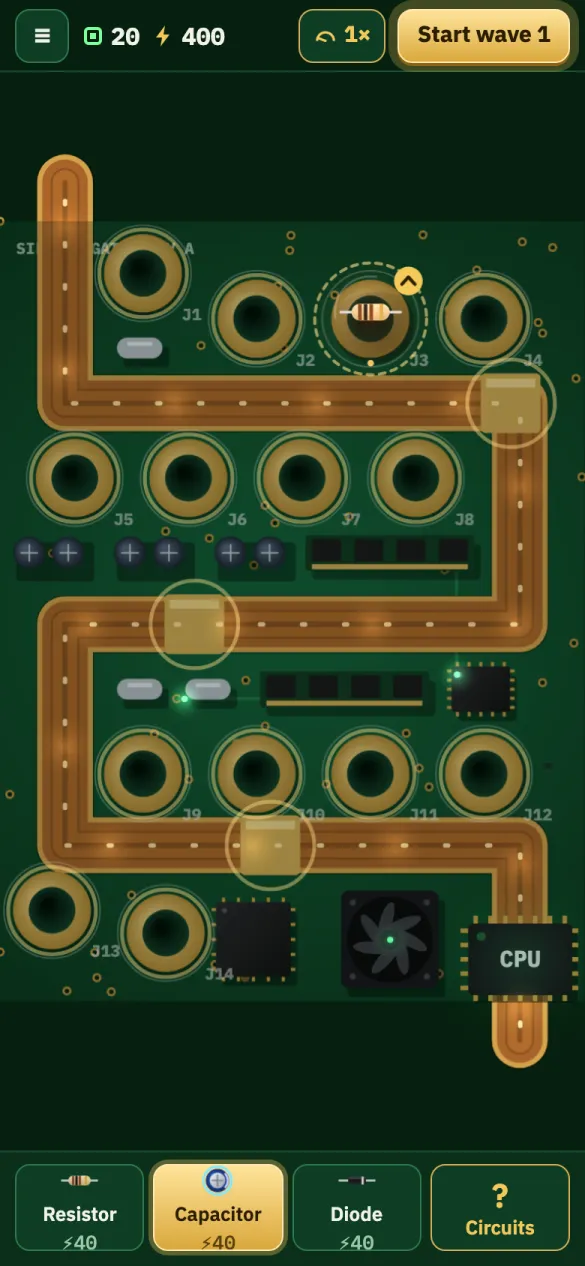
Tap a part, then tap a gold pad
The pads light up while you're holding something. Each part costs power, and you earn more by stopping things.
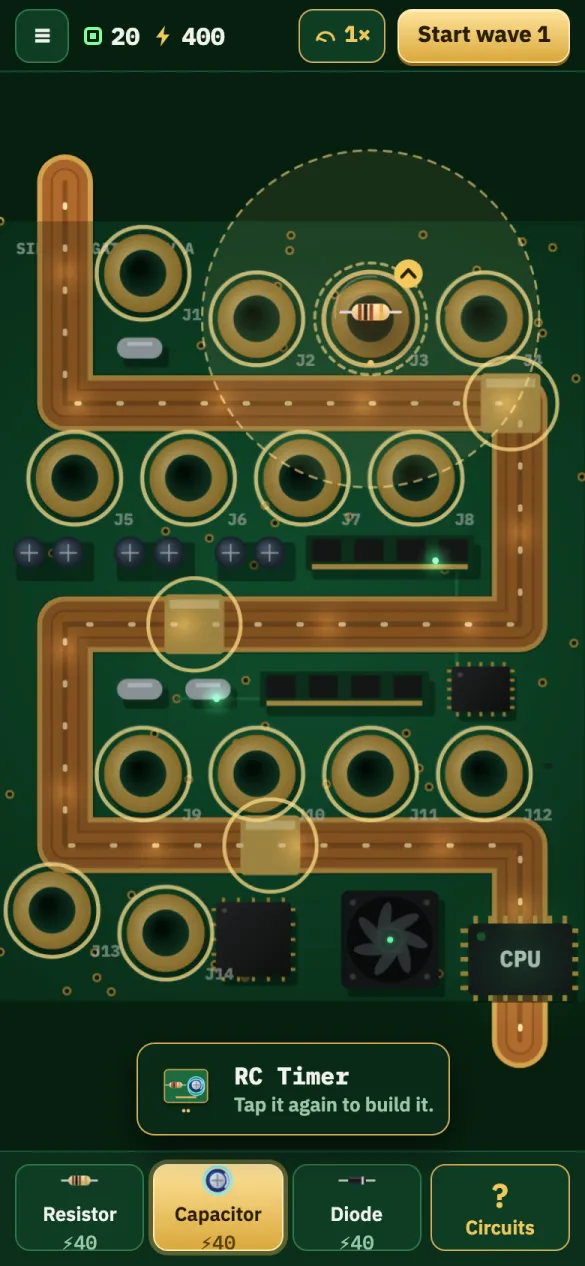
Tap a tower to build onto it
You see what it'll turn into before anything happens. Tap the tower again to build it.
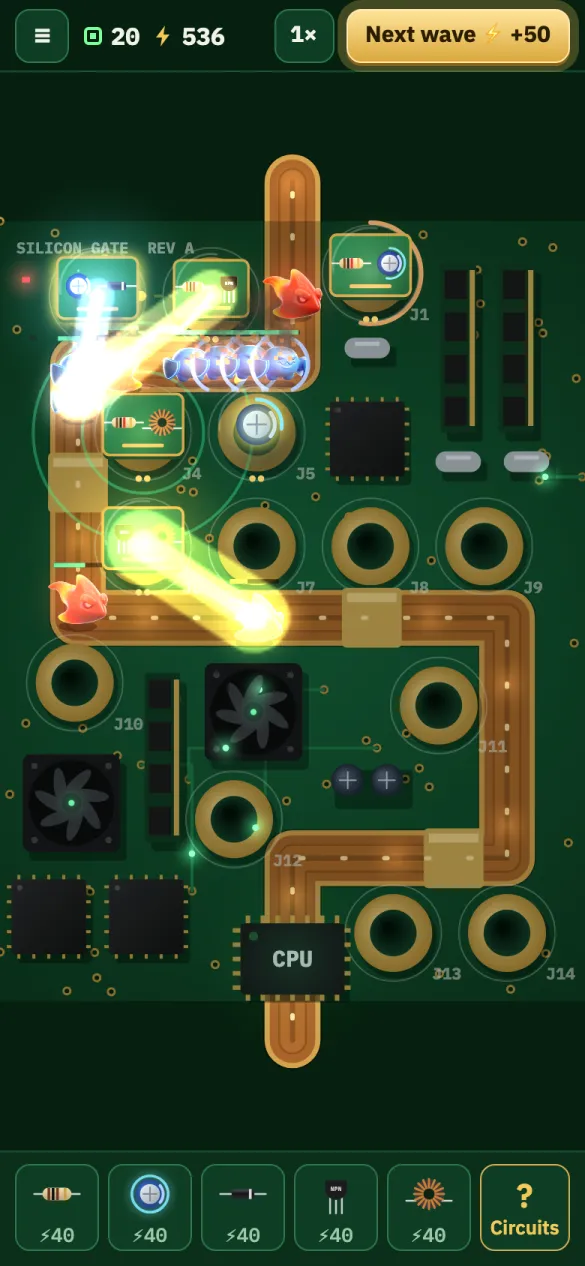
Hold the line
Call the next wave early for bonus power. If something slips past, tap a part and then the path, and it blows like a fuse.
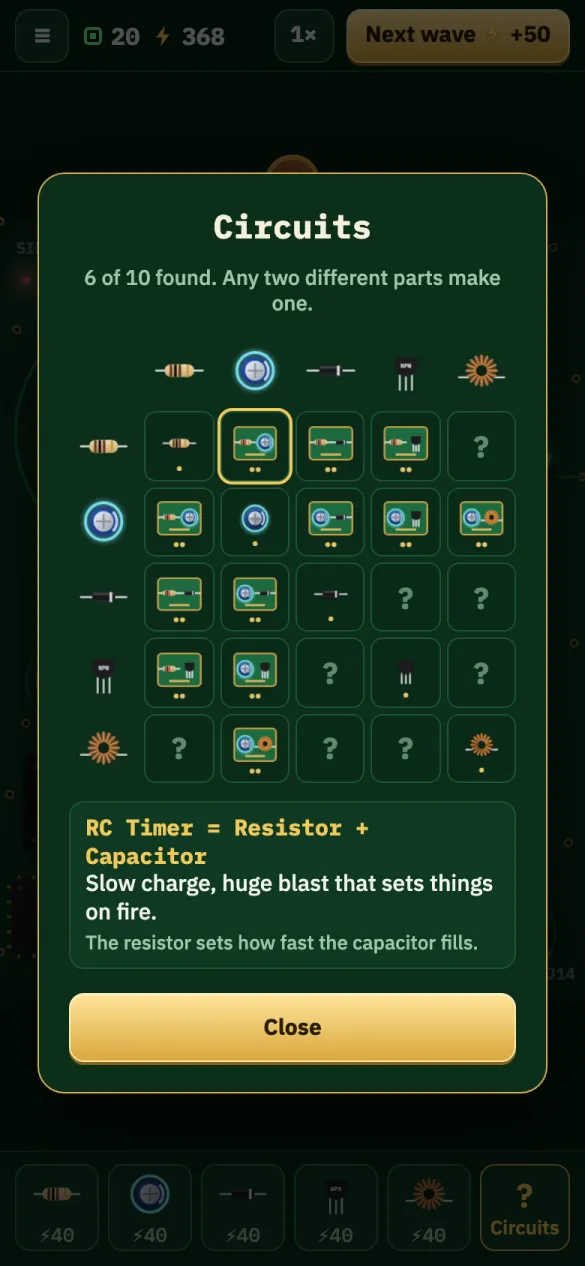
Tap any tower to see what it does
The game slows way down while the card is open. It shows the tower's level, its power and what the real part does. The Circuits book fills in as you find them.
What's coming down the trace
You can tell them apart by how they move. Each one is named after something that goes wrong in real electronics.

Surge
It's tough, and it speeds up as it gets hurt.
A short jolt of too much voltage.

Noise
Jittery and hard to hit with single shots.
The random fuzz on every signal.

Glitch
Every couple of seconds it jumps ahead.
One wrong 0 or 1, which is all it takes to crash a program.

Phantom
Drains your power the whole time it's on the board.
Power a device pulls even when it's off.

Worm
Splits into smaller worms when it breaks.
A program that copies itself from computer to computer.

Ripple
Flips a shield on and off, and most hits bounce off it.
Leftover wobble in a power supply.

Faraday
A cage around it blocks beams.
A cage that keeps electric fields out. Your microwave door has one.

Feedback
Heals everything around it every few seconds.
The squeal when a mic hears its own speaker.
And a boss at the end of each zone

Brownout
A huge, slow drop in voltage. Towers near it fire at half speed.
When the voltage sags and your lights dim.

Zero-Day
Every 15 seconds it knocks out your closest tower.
A security hole nobody has patched yet.
Turn it up when you're ready
The overclock dial
Run a level at 1×, 1.5×, 2×, 3× or 5×. Enemies get tougher the higher you go.
Three stars a level
One for clearing it, one for keeping the dial at 2× or higher, and one for that level's challenge, like letting nothing through.
Upgrades
Spend stars on five upgrade tracks, one per part. A circuit gets the upgrades of both parts that made it.
The Daily Board
A new board every day, the same one for everyone. Your first try counts for your score and your streak. After that, practice it as much as you want.
Twelve levels, two zones
The Power Supply, then the CPU. Each zone ends with a boss.
How it pays for itself
- Free to play, with ads.
- One ad after every fifth level you clear. Never during a level, and never after you lose one.
- $1.99 once turns the ads off for good. No subscription, no coins, no energy meter.
- Plays offline with no Wi-Fi, and there is no account to make.
Questions
What does a resistor do?
It limits how much current flows through a circuit and turns the extra energy into heat. In Silicon Gate, a resistor tower slows enemies down and burns them.
How does a capacitor work?
It stores electric charge between two plates and can let it all go at once, which is how a camera flash works. In the game, a capacitor charges up and then blasts everything near it.
Do I need to know electronics?
No. Tap any tower and it tells you what it does, and you'll get the idea by watching it fire. If you do know electronics, the circuits will make sense right away.
Does it work offline?
Yes. The game runs with no Wi-Fi or signal. Ads need a connection, so with no signal you just don't see any.
Is it on iPhone and iPad?
Android comes first, with iPhone and iPad right behind it. It plays in portrait, one-handed.
Who is it for?
Teens and adults, 13 and up. Anyone who likes tower defense, and anyone who has looked at a circuit board and wondered what all the little parts do.
Who made it?
Pettigrew Lab, a small family studio. The first time my kids played it, they said "whoa, that's cool" a lot and couldn't tell what the towers did. So now every tower tells you what it does when you tap it.
Want to know when it's out?
Send one email and we'll write back the day it's in the store. That's the only email you'll get.
Tell me when it's out