Stranded on PrincipleLearn how planes really fly
You wash up on an island with history’s great inventors and a storm on the way. Hear their ideas, build a flying machine from three of them, test it off the cliff, and get everyone to the ship before the storm hits.
On Android now, iPhone next. Free with ads, and $1.99 takes them off for good. Ages 13 and up.
How a run plays
- 1
Hear the inventors at camp
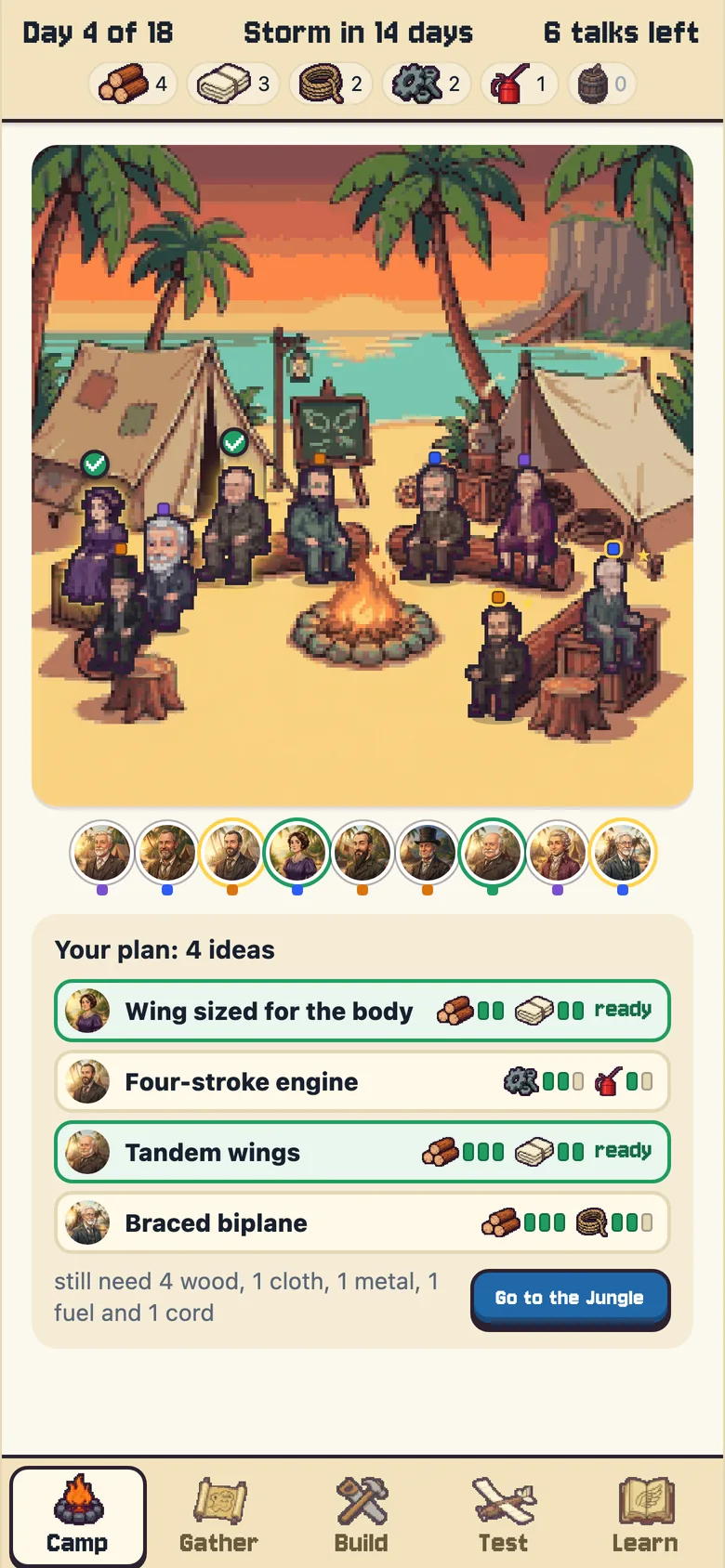
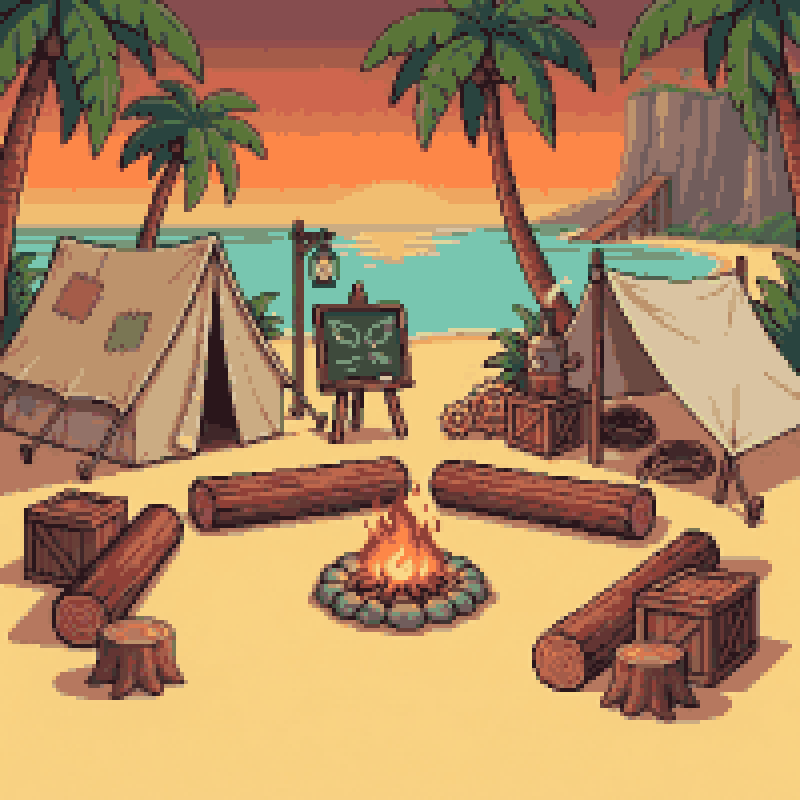
Cayley, the Wright brothers, Ada Lovelace and more are stranded with you. Listening is free. Each one has an idea for your plane and tells you what it takes to build.
- 2
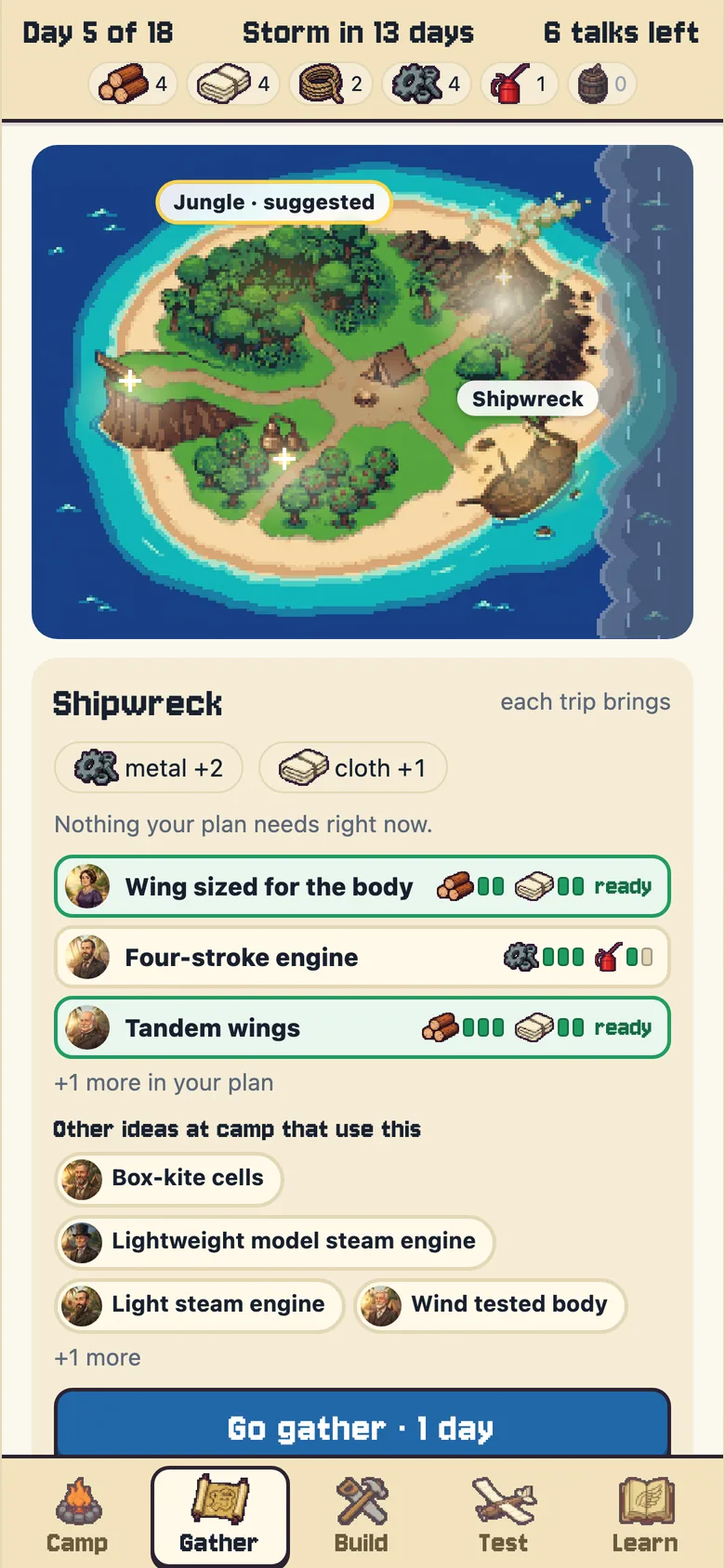
Gather what your plan needs
Every trip across the island takes a day. The map lights up the stop that gets your plan built soonest, and building an idea uses its materials up.
- 3
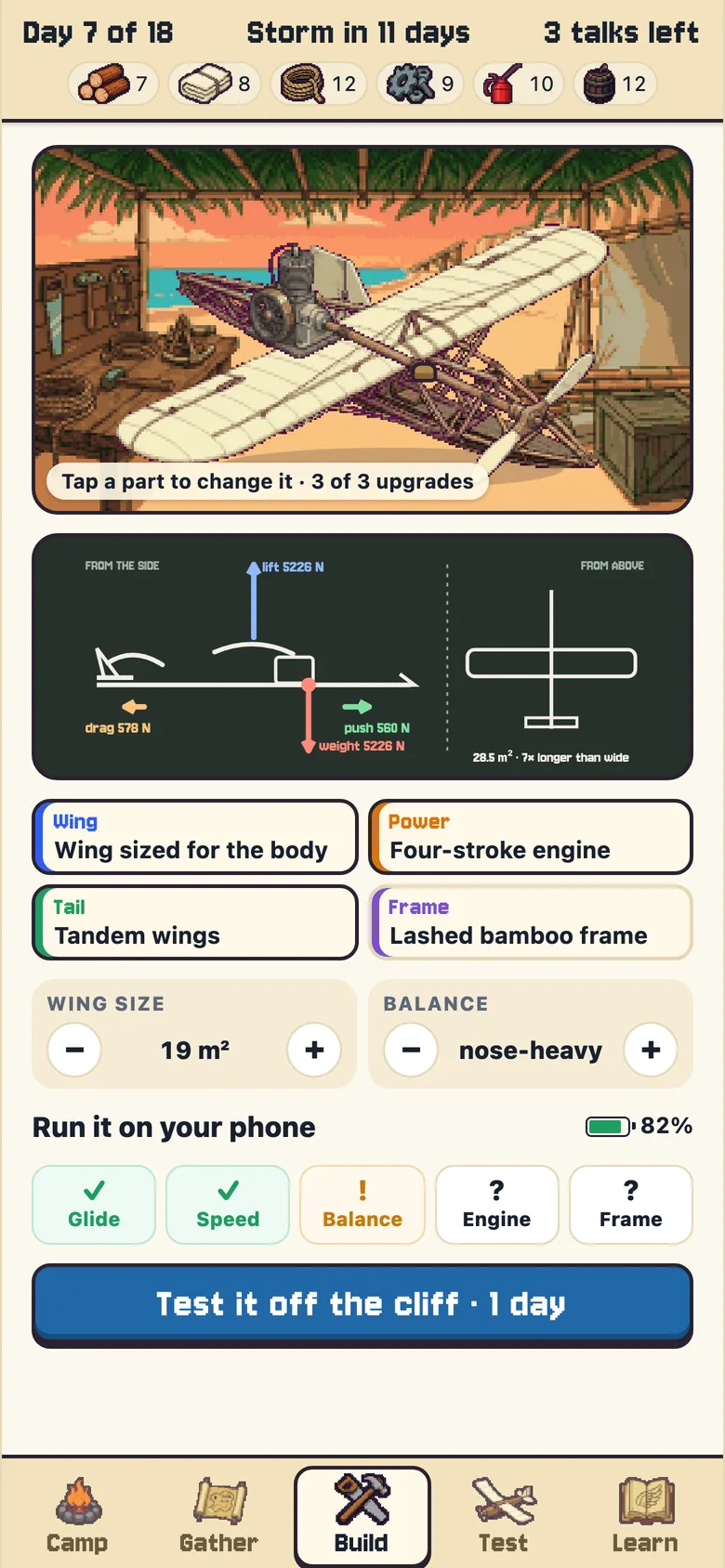
Build it from three ideas
Pick a wing, an engine, a tail and a frame, then run the numbers on your phone. The blueprint draws lift, weight, push and drag at their real sizes.
- 4
Test it off the cliff
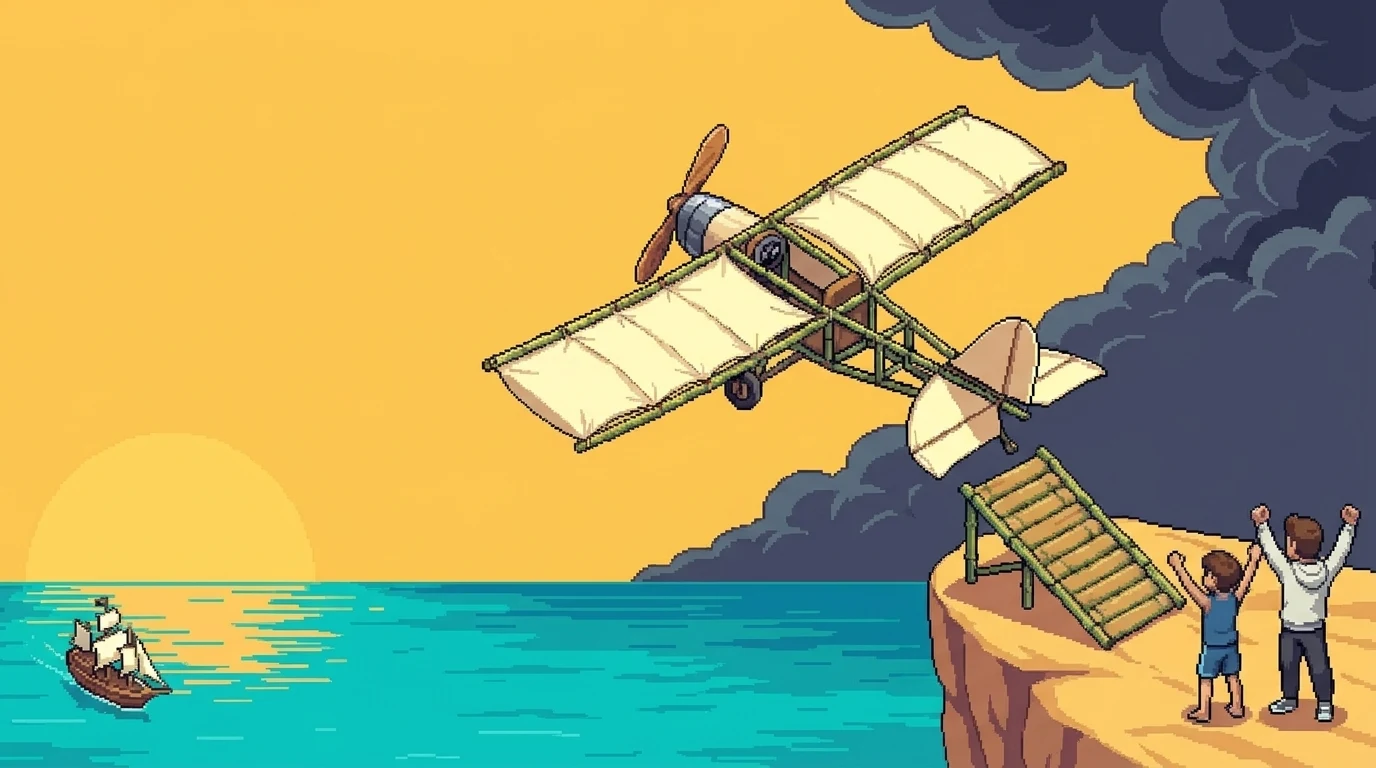
Call where it’ll come down, then watch it fly. Every test costs a day, and you find out exactly why it landed where it did.
- 5
See why it flew
Every lesson has a graph with your own flights on it. Drag a slider and watch the number that decides whether you make it.
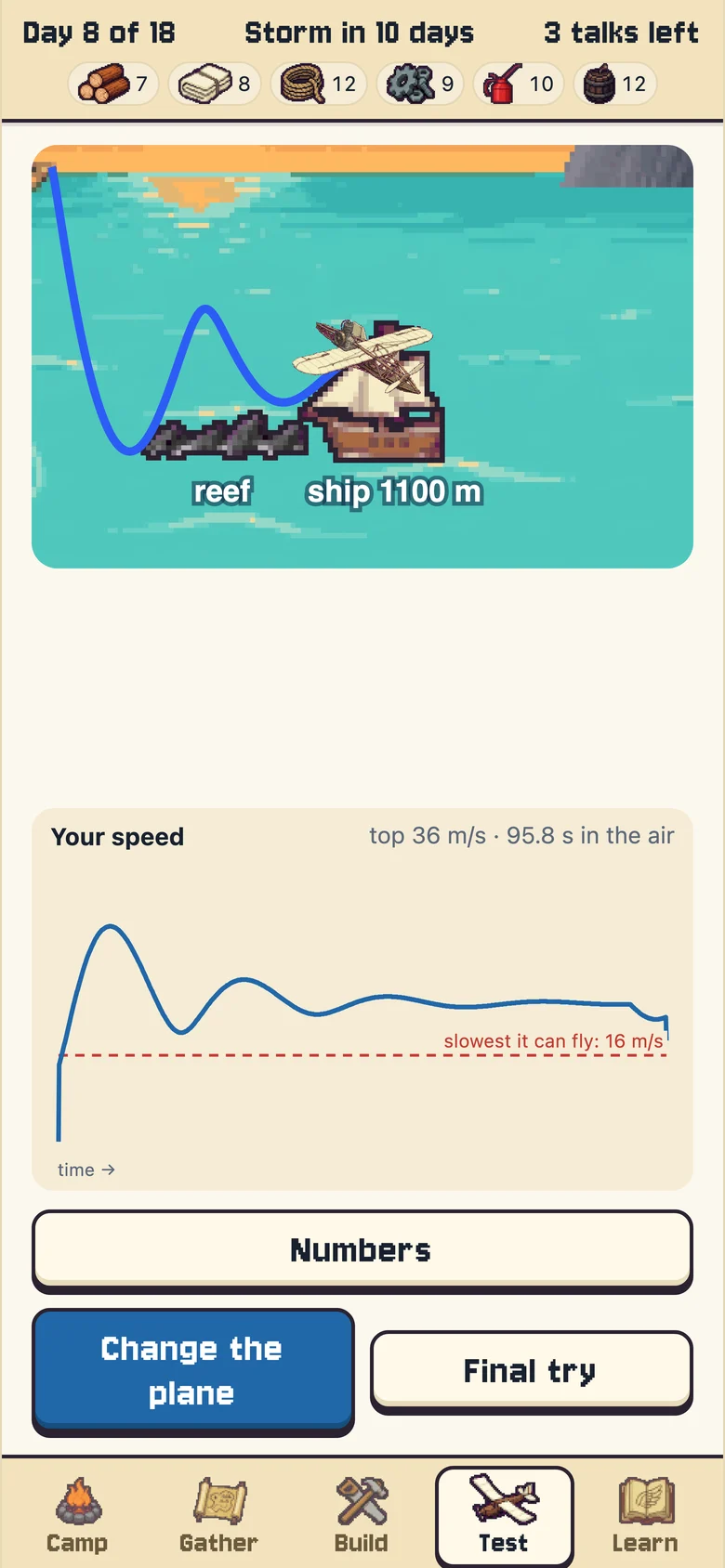
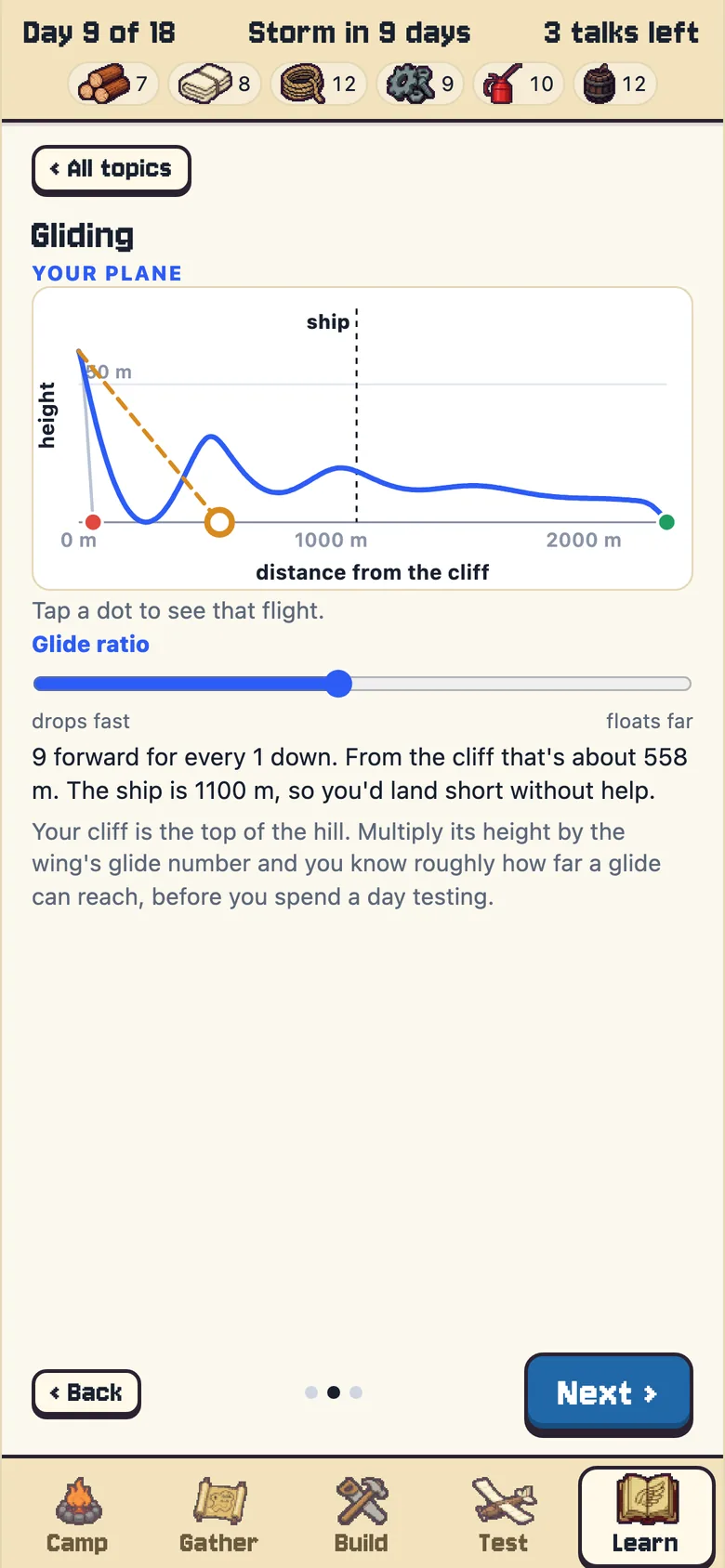
Knowing beats luck
Six rules of thumb decide every flight, the same ones you’d meet in a physics class. How far a glide goes. How fast the wing has to move. Where the weight sits. Whether the engine out-pulls the drag.
We checked it on 40 islands. Guess your way through and you almost never get off a Standard island. Play by the rules and you get off about 3 in 10, and it climbs as you get better.
Five of the inventors at camp
There are 31 in the game, and nine wash up on each island. Here are five, and the piece of flight each one hands you.
George Cayley
Curve the wing like a bird’s and it lifts sooner off the cliff. The catch is that the curve pulls the nose down, so he brings a tail too.
Lesson: Balance
Otto Lilienthal
He spent years measuring wing curves on a spinning arm. Then he hung under his gliders and steered by swinging his legs.
Lesson: Gliding
The Wright brothers
They didn’t trust anybody’s numbers, so they built a wind tunnel and tested about 200 little wings. Their propeller is just a wing going round in a circle.
Lesson: Long wings
Daniel Bernoulli
Faster air has lower pressure. In the game that becomes a gauge that reads your airspeed, so the pilot can ease the nose down before a stall.
Lesson: Lift and speed
Isaac Newton
Air pushes back on anything moving through it. He worked out the nose shape that meets the least push.
Lesson: Thrust and drag



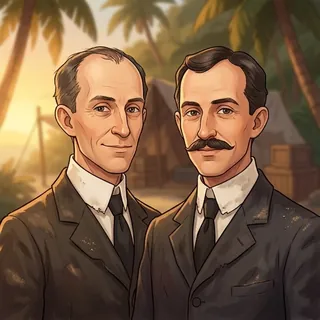




Archimedes, Ada Lovelace, Sophie Blanchard and 23 more are waiting on the island.
What you actually learn
Seven lessons. Each one starts with something you already know, shows it on your own plane, then shows where it turns up in physics class.
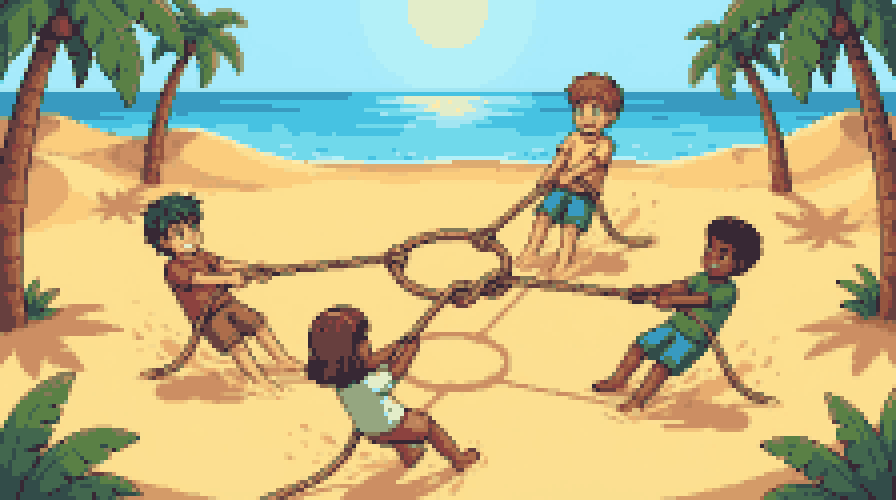
The four forces
Lift, weight, thrust and drag, in a four way tug-of-war.
In class: Forces and Newton’s laws

Gliding
How far you glide is about your height times the glide ratio.
In class: Energy, and forces on a slope

Lift and speed
Lift grows with speed squared and with wing area.
In class: Fluids, and Newton’s third law

Long wings
Long, thin wings waste less at the tips.
In class: Energy conservation
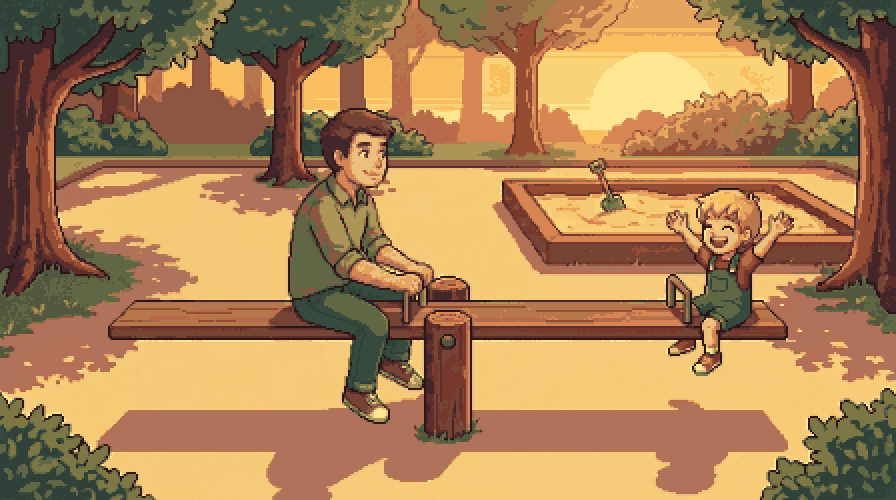
Balance
The weight sits a little ahead of the lift.
In class: Torque and rotation

Thrust and drag
The engine has to out-pull the air.
In class: Newton’s laws, and power
Strong frames
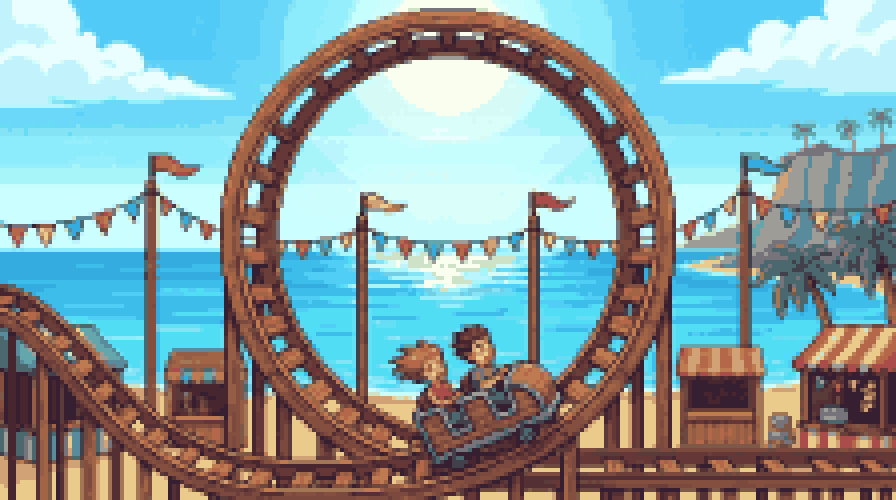
Pulling up piles load onto the frame.
In class: Circular motion
Playing it with a class
Cast one phone to the classroom TV and play an island together. Everybody argues about the wing, you test it, and the graph shows who was right.
One purchase of $1.99 takes the ads off for good, so there’s nothing on the screen but the island and the physics.
Questions
Is it free?
Yes. It’s free with ads, and $1.99, once, takes them off for good.
Who is it for?
Ages 13 and up. It’s built around what a 9th grader meets in physics, and it’s still fun if that class was a long time ago.
Is the physics real?
Yes. Every flight runs on the equations for lift, drag, thrust and weight, a sixtieth of a second at a time. The inventors’ ideas come from what they actually built or wrote down.
Does it need the internet?
No. The game plays offline, start to finish.
When can I get it?
It’s on Google Play now, free. iPhone is next, and the link at the bottom of this page gets you one email when it’s ready.
Get everyone off the island.
Nine inventors, one cliff, a storm on the way. Knowing how a plane flies is the way out.